
A Fool’s Guide to Fools:

Jesters, Clowns, Harlequins, and the Art of Looking Ridiculous

The art of being a fool has a longer and more structured history than it first appears. For centuries, people have made careers out of jokes, pratfalls, and painted faces. Behind the laughter, though, there is method, tradition, and in some cases, a surprising amount of risk.

Modern audiences tend to group all comic performers together. Any bright costume or exaggerated expression is likely to be labeled a “clown.” Historically, the distinctions mattered. A jester in a royal court, a clown on a stage, and a harlequin in an Italian performance each served different purposes and followed different rules.

Clown with Pointed Hat Costume Vector
Anonymous (1892)
Jester with Pointy Hat Costume Vector
Anonymous (1892)
Clown with Pointed Hat Costume Vector
Anonymous (1892)
Jester with Pointy Hat Costume Vector
Anonymous (1892)

At a glance, these figures can look similar. They may share colorful clothing, exaggerated gestures, or a general air of absurdity. Their roles, however, developed in very different environments, each with its own expectations and limits.

What connects them is not just humor, but function. Each occupies a space where normal behavior is suspended just enough to allow criticism, observation, or disruption. The performance may look chaotic, but it rarely is.

Understanding the differences between these figures makes it easier to see what they actually do. The jester speaks where others cannot, the clown exaggerates what others ignore, and the harlequin manipulates what others accept. The fool, in all forms, operates somewhere between sense and nonsense.

The Jester: Humor at Court

The medieval jester occupied a strange position within the royal court. Employed to entertain, he performed songs, jokes, stories, and physical routines while saying things others avoided.

Humor gave the jester a certain freedom, but not safety. A joke that landed poorly could still be treated as an insult, and the protection of the role depended entirely on the ruler’s tolerance. This made the jester both useful and vulnerable, since the line between wit and offense could be thin.

Jester Vector
John Davidson (1890)
Jester Vector
Pieter Jansz. Quast (1638)
Jester Vector
John Davidson (1890)
Jester Vector
Pieter Jansz. Quast (1638)

One well-known example is Will Sommers, who served Henry VIII. Despite the king’s reputation, Sommers remained in favor for many years, suggesting careful timing as much as quick wit.

Another figure, Triboulet, served Francis I of France. After insulting a noble, he was sentenced to death. When granted a final request, he asked to choose the manner of his execution. The king found the response amusing and pardoned him.

Jesters also relied on physical performance. They played instruments, juggled, and used exaggerated movement, with the familiar bell-capped costume marking them as separate from the court.

In some cases, jesters were valued precisely because they could offer criticism without openly challenging authority. A ruler might tolerate uncomfortable truths if they were delivered carefully enough, though the position remained unstable and highly personal.

By the 17th century, the role declined. Court culture shifted, and rulers showed less interest in humor that carried criticism. Without that space, the jester gradually disappeared.

The Clown: From Stage to Circus

The term “clown” originally referred to a rustic or unsophisticated person before becoming associated with comic performers in theater. By the era of William Shakespeare, clowns appeared regularly on stage.

These characters often combined humor with observation. In Hamlet, the gravedigger uses dark humor to reflect on mortality, and across Shakespeare’s plays, comic figures frequently deliver some of the clearest insights. Their jokes are rarely just decoration; they often carry the point more directly than the surrounding dialogue.

Unlike the court jester, the stage clown depended on the audience rather than a patron. If a joke failed, there was no protection beyond the next attempt to recover.

Swiss Clowns Vector
Anonymous (1892)
Mr. Grimaldi as Joey the Clown,
(1822) by Piercy Roberts
Swiss Clowns Vector
Anonymous (1892)
Mr. Grimaldi as Joey the Clown,
(1822) by Piercy Roberts

The modern image of the clown took shape in the 19th century through performers such as Joseph Grimaldi. His use of white face paint, bold expressions, and energetic movement helped define the role, turning physical comedy into something structured rather than incidental.

Large gestures and painted features allowed expressions to carry across crowded, poorly lit spaces, making exaggeration a practical necessity rather than just a stylistic choice.

Clowning later developed into several recognizable types. The whiteface clown maintains control and structure, while the Auguste clown disrupts it through clumsy behavior and exaggerated reactions. Their interaction creates a simple dynamic between order and disorder.

Other variations emerged as the form spread, but most clowning relies on precise timing beneath the appearance of chaos. What seems uncontrolled is usually carefully arranged.

Over time, the clown’s image broadened. In some settings, it remained lighthearted. In others, it took on a more unsettling tone. The fixed smile, designed for clarity on stage, can feel unnatural outside of performance, where it no longer responds to context.

This shift helps explain why the same figure appears in both children’s entertainment and horror. The elements remain largely the same, but their meaning changes with the setting.

The Harlequin: Movement and Strategy

The harlequin comes from the Italian tradition of commedia dell’arte, a form of theater built on improvisation and established character types. Known as Arlecchino, he is agile, quick-thinking, and often drives the plot through schemes and sudden changes in direction.

Commedia dell’arte relied on loose outlines rather than fixed scripts, allowing performers to shape scenes in the moment. This environment suited the harlequin, whose effectiveness depends on speed and adaptability.

Harlequin Vector
Anonymous (1892)
Masked Harlequin with Slapstick Costume Vector
Anonymous (1892)
Harlequins
(18th century) by Anonymous
Harlequin Vector
Anonymous (1892)
Masked Harlequin with Slapstick Costume Vector
Anonymous (1892)
Harlequins
(18th century) by Anonymous

In contrast to the clown’s mishaps and the jester’s speech, the harlequin operates through timing and intention. He reacts quickly and often outmaneuvers other characters. Where the clown appears overwhelmed by events, the harlequin is usually the one arranging them.

His schemes are not always honest. He may lie or disguise himself, but the tone remains playful. Audiences are meant to follow his logic, even when it bends the rules.

The performances include familiar roles. Pantalone represents wealth and greed, Il Dottore speaks with misplaced confidence, and Columbina often matches or surpasses the harlequin in awareness. These relationships provide structure while leaving room for variation.

The harlequin’s slapstick prop produces a sharp sound when struck, giving rise to the term “slapstick comedy.” Despite the name, the humor is precisely timed rather than random.

His costume reflects a similar shift from improvisation to structure. Once made from patched fabric, it evolved into the recognizable diamond pattern, mirroring the character’s movement from apparent disorder to deliberate design.

As the tradition spread, the harlequin became central to pantomime and other theatrical forms. While later versions sometimes softened his role, the core traits of speed, adaptability, and calculated action remained.

The Fool: A Wider Tradition

The figure of the fool extends beyond any single role, appearing across literature, folklore, and religious traditions. Rather than a profession, it functions as a way of disrupting normal behavior to reveal what others overlook.

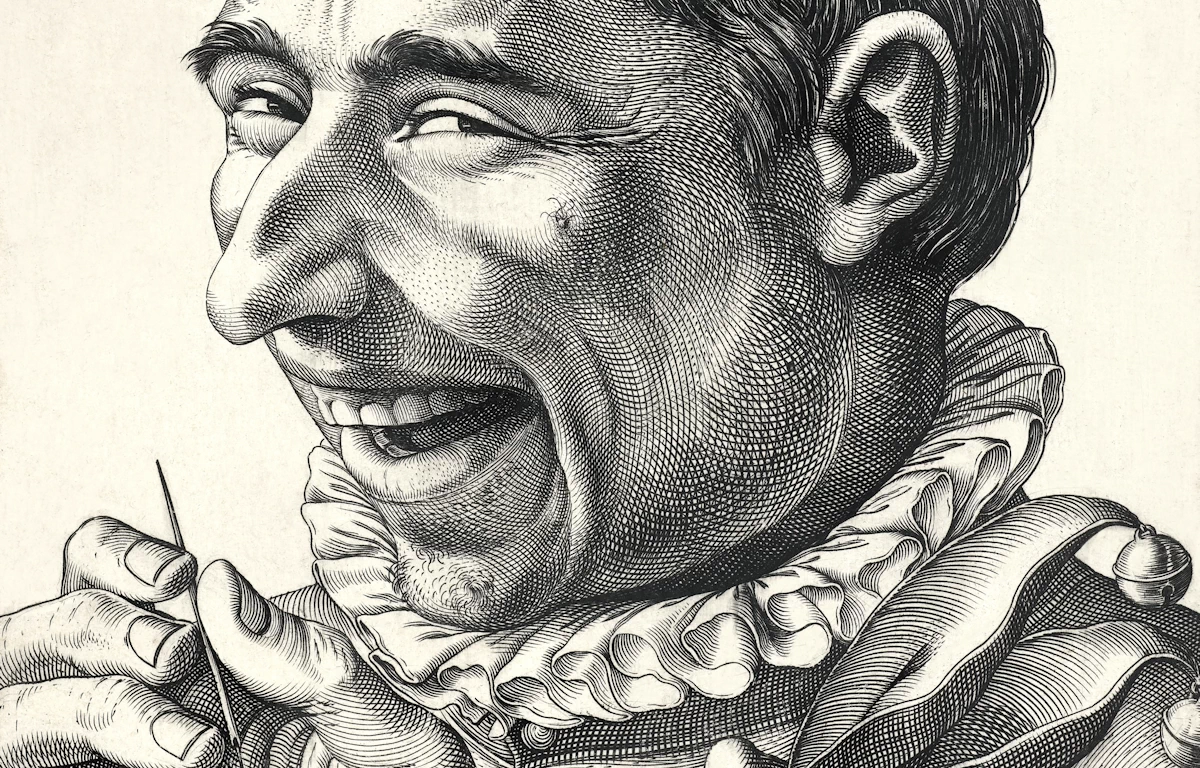
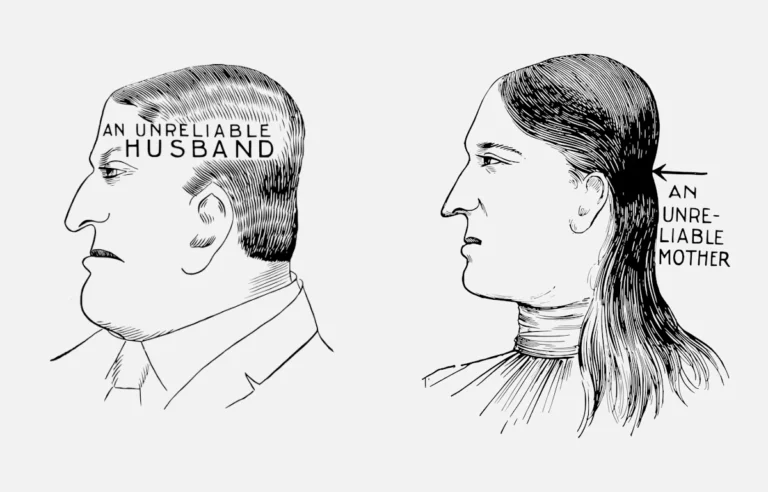
Unlike the jester, clown, or harlequin, the fool is not tied to a specific setting. He can shift between absurdity and insight, sometimes appearing ridiculous, sometimes unexpectedly clear. That tension is part of the function: by appearing unreliable, the fool creates space to say things others cannot.

Young Fool Costume Vector
Anonymous (1892)
Till Eulenspiegel
Jakob Heinrich von Hefner-Alteneck (1879)
Young Fool Costume Vector
Anonymous (1892)
Till Eulenspiegel
Jakob Heinrich von Hefner-Alteneck (1879)
In Shakespeare’s King Lear, the Fool cuts through confusion with blunt observations disguised as jokes. He does not resolve the situation, but he makes its flaws visible.

Similar figures appear elsewhere. Among the Lakota, the Heyoka uses reversal and contradiction to challenge expectations. In German folklore, Till Eulenspiegel exposes arrogance through literal-minded pranks and exaggerated logic.

In each case, the fool avoids direct confrontation, exposing flaws by bending rules rather than arguing against them.

This flexibility allows the fool to move between roles and meanings without settling into one form.

The same concept appears symbolically in the Tarot, where the Fool represents uncertainty and beginnings rather than ignorance.

Across these variations, the details change, but the function remains consistent: to unsettle, amuse, and reveal.

Jester, Clown, and Harlequin: A Clear Distinction

Although these figures overlap in appearance, their roles differ in focus.

  • The jester belongs to the court and relies on speech and social awareness
  • The clown develops through performance, emphasizing physical humor and exaggeration
  • The harlequin combines agility with deliberate action within structured improvisation

A simple way to distinguish them is by how they create humor: the jester speaks, the clown reacts, and the harlequin acts with intent.

Modern Versions of Old Roles

The traditional forms have changed, but their functions remain visible. Political satire continues the work once carried out in royal courts. Figures such as John Oliver and Stephen Colbert use humor to examine current events.

Unlike court jesters, modern satirists rely on audience support rather than patronage, making their position broader but less secure.

Clowns still appear in performance, though their image varies widely. In some contexts, they remain lighthearted; in others, they are used to create tension or discomfort.

The harlequin continues to influence modern characters, including Harley Quinn, whose design and behavior reflect elements of the original role.

Humor itself has shifted forms. Online satire and parody deliver commentary through speed and reach rather than physical presence.

Even traditions such as April Fools’ Day reflect the lasting appeal of playful deception.

Why These Figures Persist

Across centuries and cultures, fools of different kinds have served a similar purpose. They present ideas in a form that is easier to approach but harder to dismiss.

Whether in a court, a theater, or a modern platform, these figures entertain while testing boundaries and exposing weaknesses in the systems around them.

The setting has changed, but the need for indirect expression remains. The same patterns now appear in faster, broader forms such as political satire, parody, and online humor, but the method is familiar.

Humor does not replace direct speech; it slips past it.

Without these figures, public life would likely be more straightforward, but also less revealing. Humor has a way of showing what direct speech often avoids.

The costumes may change, but the role endures. The quickest way to say something serious is still to make it look like a joke.

Similar Posts