$39.51
$74.28
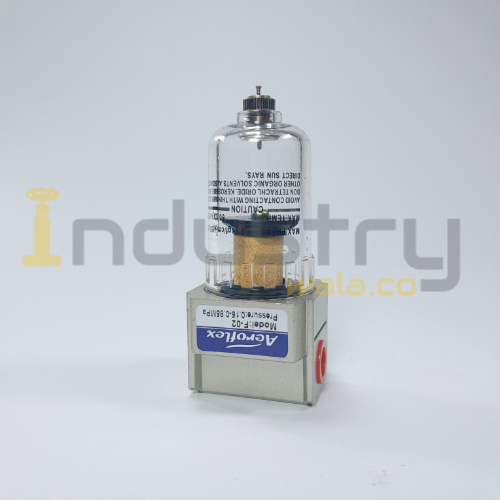
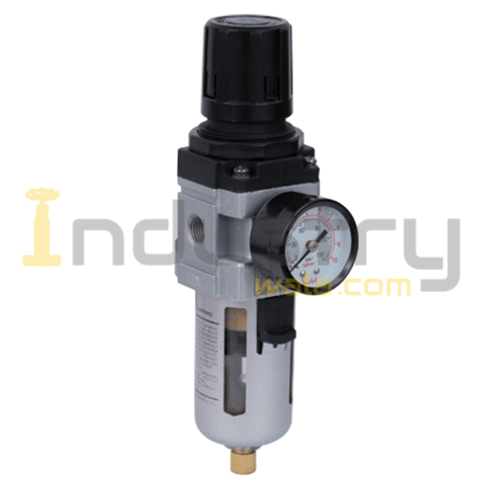
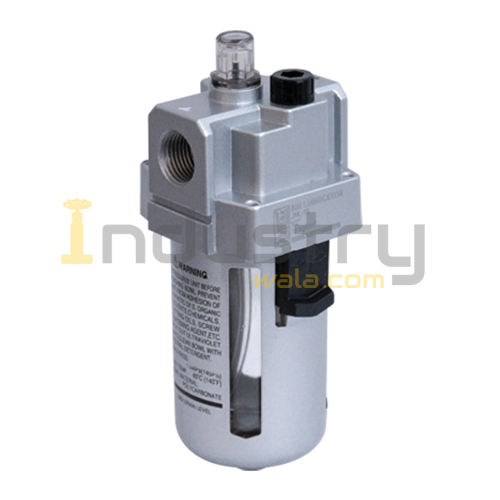
What is a compressed air filter? A compressed air filter or air line filter is used to filter impurities from atmospheric air, like dust, oil and moisture, to make compressed air viable for use. Just like air dryers, they are a crucial part of the air treatment process to make sure your compressed air is clean and safe to use, and to increase your equipment’s life span. Proper air preparation significantly increases the process and production reliability of machines. Particles, water and oils in compressed air reduce the service life and functionality of components and systems. They also impair productivity and energy efficiency. In this article, a variety of air filtration and air treatment products are outlined and discussed, along with ancillary equipment like drains. Why Compressed Air Filtration is Necessary One cubic foot of compressed air can contain millions of dirt particles, considerable amounts of water and oil — and even heavy metals like lead, cadmium and mercury. If they are not filtered out, trouble-free operation of the system components, like valves and cylinders, cannot be guaranteed in the long term. Poorly prepared compressed air can contaminate control valves, and cause seals to swell and wear prematurely. As a result, the right compressed air preparation is essential for reducing machine downtime, and for reducing maintenance and energy costs. Filters are used to remove particles, condensate and oil. Coarse / particulate filters have a pore size of 5 to 40 microns. The air flows past a centrifugal separator and then through the filter element. The filter elements are often a sintered material, like polyethylene or bronze. Fine and micro filters remove particles smaller than 1 micron, down to 0.01 micron. The air flows through the filter cartridges from the inside to the outside. Solid particles get stuck in the filter cartridge, clogging it up. Fluid particles, such as condensate or oil, coalesce or attach to larger droplets, which flow off and are caught in the filter bowl. It is important to cascade your filters to avoid prematurely clogging the filter element. For example, if 1-micron filtration is needed, it is recommended to use a 5-micron filter upstream so that the 1-micron filter does not become clogged with larger particles. Pressure regulators reduce and control fluid pressure in compressed air systems. Regulators are also frequently referred to as PRVs (pressure reducing valves). Optimally, a pressure regulator maintains a constant output pressure regardless of variations in the input pressure and downstream flow requirements. FAQs – Festo MIDI G1/2 / G1/4 FRC Filter, Regulator, Lubricator FRL 1/4″ & 1/2″: 1. How does an frl festo unit improve air quality and performance in pneumatic systems?A frl festo unit filters impurities, regulates air pressure, and adds necessary lubrication, ensuring clean, stable, and efficient airflow for longer equipment life. 2. Is this frl festo suitable for both 1/4″ and 1/2″ pneumatic line connections?Yes, the frl festo assembly is designed to support both 1/4″ and 1/2″ line sizes, making it compatible with a wide range of pneumatic tools and machines. 3. Does using an frl festo help reduce equipment wear and maintenance costs?Absolutely. A frl festo ensures clean and lubricated air supply, which minimizes internal friction, prevents contamination, and significantly reduces maintenance frequency. 4. Can the frl festo provide stable pressure regulation for high-demand industrial applications?Yes, the frl festo offers precise pressure control, delivering consistent and reliable air regulation suitable for demanding industrial pneumatic operations. SKU: 2a9b4f3d46ac Category: Air Filtration Units Tags: festo, festo filter, festo frl, festo midi, filter, frl, lubricator, regulator
Pneumatics